 Image 1 of 1
Please note that prices for kinesiology taping can vary depending on the extent of taping and assessment needed. In general, expect to pay between 50 and 150 euro.
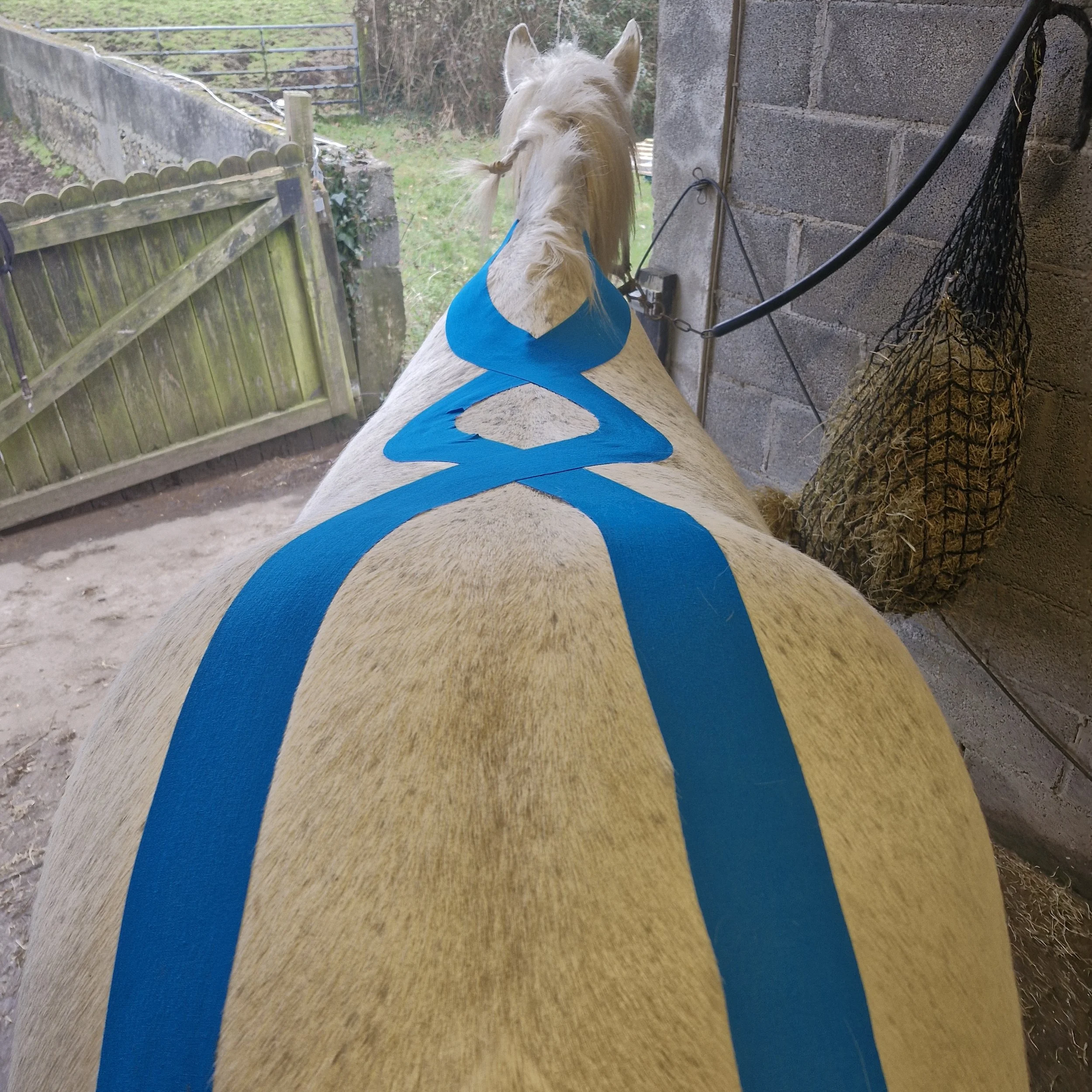
Equine kinesiology taping is a therapeutic technique used to support the horse’s musculoskeletal and lymphatic systems without restricting range of motion. Derived from human sports medicine, this method utilizes elastic, adhesive tape applied to specific areas of the horse’s body to influence physiological and biomechanical processes.
When properly applied, the tape gently lifts the skin, creating a decompressive effect that promotes improved circulation, lymphatic drainage, and proprioceptive feedback. This can lead to reduced inflammation, decreased discomfort, and enhanced muscle function. The tape’s elasticity mimics the natural properties of the skin, allowing for continuous support during movement while maintaining the horse’s comfort and freedom of motion.
In equine practice, kinesiology taping is often used as a complementary therapy for various conditions, including soft-tissue injuries, muscle fatigue, joint instability, postural imbalances, and recovery following intense physical exertion. It can also serve as a valuable assessment and training tool, providing tactile input that encourages correct posture and movement patterns.
Application of equine kinesiology tape requires knowledge of anatomy, biomechanics, and the horse’s individual needs. Techniques may vary depending on therapeutic goals—ranging from support and stabilization to decompression and sensory stimulation. Tape placement, direction of pull, and tension are carefully adjusted to achieve the desired outcome.
Overall, kinesiology taping represents a non-invasive and versatile addition to equine rehabilitation, conditioning, and performance programs. When integrated into a comprehensive treatment plan under the guidance of a qualified practitioner, it can enhance the horse’s comfort, functionality, and overall well-being.
Equine kinesiology taping is a therapeutic technique used to support the horse’s musculoskeletal and lymphatic systems without restricting range of motion. Derived from human sports medicine, this method utilizes elastic, adhesive tape applied to specific areas of the horse’s body to influence physiological and biomechanical processes.
When properly applied, the tape gently lifts the skin, creating a decompressive effect that promotes improved circulation, lymphatic drainage, and proprioceptive feedback. This can lead to reduced inflammation, decreased discomfort, and enhanced muscle function. The tape’s elasticity mimics the natural properties of the skin, allowing for continuous support during movement while maintaining the horse’s comfort and freedom of motion.
In equine practice, kinesiology taping is often used as a complementary therapy for various conditions, including soft-tissue injuries, muscle fatigue, joint instability, postural imbalances, and recovery following intense physical exertion. It can also serve as a valuable assessment and training tool, providing tactile input that encourages correct posture and movement patterns.
Application of equine kinesiology tape requires knowledge of anatomy, biomechanics, and the horse’s individual needs. Techniques may vary depending on therapeutic goals—ranging from support and stabilization to decompression and sensory stimulation. Tape placement, direction of pull, and tension are carefully adjusted to achieve the desired outcome.
Overall, kinesiology taping represents a non-invasive and versatile addition to equine rehabilitation, conditioning, and performance programs. When integrated into a comprehensive treatment plan under the guidance of a qualified practitioner, it can enhance the horse’s comfort, functionality, and overall well-being.
Please note that prices for kinesiology taping can vary depending on the extent of taping and assessment needed. In general, expect to pay between 50 and 150 euro.